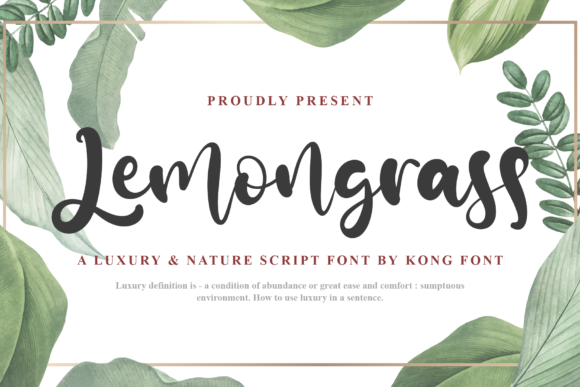
Lemongrass: A Fresh Take on Handwritten Typography
There’s something undeniably magnetic about a font that feels both personal and polished. Lemongrass, a modern handwritten script typeface from Kong Font Studio, strikes that balance with a playful yet professional energy that immediately draws the eye. It’s the kind of font that makes you lean in—whether it’s gracing a wedding invitation, a boutique product label, or a social media graphic. But beyond its visual charm, Lemongrass offers practical versatility for designers, entrepreneurs, and creators who want their projects to feel authentic without sacrificing clarity.
Why Lemongrass Stands Out in a Sea of Script Fonts
Handwritten fonts can be tricky. Too casual, and they look amateurish; too refined, and they lose their human touch. Lemongrass navigates this terrain beautifully. Its letterforms have a natural, flowing rhythm that mimics real handwriting, but with enough consistency to remain legible at various sizes. The subtle variations in stroke weight give it a dynamic, organic quality—think of the slight imperfections in a handwritten note that make it feel genuine.
What makes it particularly useful is its adaptability. Lemongrass works well for both display purposes—like headlines or logos—and smaller text applications, provided you pair it thoughtfully. It’s not a font that demands all the attention; instead, it complements other design elements, adding warmth and approachability without overwhelming the composition.
Practical Applications: Where Lemongrass Truly Shines
Let’s talk real-world use. If you’re a small business owner designing packaging for artisanal goods, Lemongrass can give your labels a handcrafted feel that resonates with customers seeking authenticity. Imagine a candle brand or a specialty coffee bag—the font’s playful curves can convey care and personality, helping your product stand out on a crowded shelf.
For social media managers and content creators, Lemongrass injects energy into graphics without feeling overly casual. Use it for quote overlays, Instagram story templates, or promotional banners. Its readability ensures your message gets across, even on mobile screens where clarity is crucial. Pair it with a clean sans-serif for body text, and you’ve got a balanced visual hierarchy that guides the viewer’s eye.
Bloggers and digital entrepreneurs will find it useful for creating cohesive brand assets. Think about your website headers, email newsletter graphics, or downloadable freebies like planners or worksheets. Lemongrass adds a consistent, recognizable touch across these materials, reinforcing your brand identity without requiring a massive design budget.
And let’s not forget print. Invitations, greeting cards, posters, and even merchandise like tote bags or mugs can benefit from its friendly aesthetic. Because it’s compatible with tools like Photoshop and Silhouette Design Studio, it integrates smoothly into existing workflows—whether you’re a seasoned designer or a hobbyist experimenting with new projects.
Pairing Lemongrass with Other Typefaces
A great font rarely works in isolation. The key to using Lemongrass effectively is understanding how it interacts with other typefaces. Because it’s a script font with a distinct personality, it pairs best with simpler, more neutral fonts that provide contrast without competing for attention.
For example, combining Lemongrass with a geometric sans-serif like Montserrat or Poppins creates a modern, balanced look. The sans-serif grounds the playful script, making the overall design feel both professional and approachable. Alternatively, pairing it with a classic serif like Lora or Merriweather can evoke a more traditional, elegant vibe—ideal for wedding invitations or boutique branding.
A good rule of thumb: use Lemongrass sparingly. Let it headline a design or highlight key words, then let a complementary font handle longer passages. This maintains readability while letting Lemongrass’s character shine through.
Readability and Licensing: What to Keep in Mind
No matter how beautiful a font is, it’s useless if people can’t read it. Lemongrass performs admirably in terms of legibility, but context matters. For small body text—like paragraphs in a blog post or product descriptions—consider reserving it for subheadings or pull quotes instead. Its handwritten style is better suited for larger sizes where its details can be appreciated.
Always test your designs across different devices and print formats. What looks charming on a computer screen might become muddy when printed on textured paper or viewed on a low-resolution mobile device. A quick mock-up can save you from costly revisions later.
Another practical consideration is licensing. Lemongrass is available through Creative Fabrica, and it’s important to understand the terms of use—especially if you’re creating commercial products. Most premium fonts, including this one, offer licenses that cover both personal and commercial projects, but specifics can vary. If you’re planning to use it for merchandise, client work, or digital products for sale, double-check the license to ensure compliance. It’s a small step that protects both you and the font creator.
Making Lemongrass Work for Your Brand Identity
Ultimately, a font is more than just a set of letters—it’s a tool for communication. Lemongrass offers a way to convey friendliness, creativity, and attention to detail. For entrepreneurs building a brand from the ground up, it can serve as a cornerstone of your visual identity, especially if your audience values authenticity and craftsmanship.
Start by defining your brand’s personality. Is it whimsical? Modern? Eco-conscious? Then, explore how Lemongrass aligns with those traits. Use it in your logo, on your website, and across your marketing materials to create a cohesive look. Over time, this consistency helps build recognition—your audience will start associating that distinctive handwritten style with your business.
Remember, typography is about storytelling. The right font doesn’t just look good; it feels right. Lemongrass, with its blend of playfulness and polish, might just be the missing piece that brings your next project to life.