Starfall: A Handwritten Font That Feels Both Playful and Polished
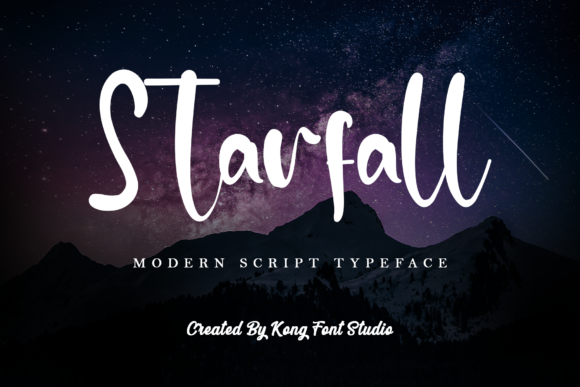
There's a moment in every design project when you realize the typeface you've chosen isn't just holding words—it's setting the entire mood. Maybe you're working on a wedding invitation and need something that feels personal but not sloppy. Or perhaps you're building a brand identity for a small bakery and want the logo to convey warmth without looking amateurish. This is the space where Starfall, a modern handwritten script font from Kong Font Studio, quietly shines.
Unlike overly ornate calligraphy fonts that sacrifice legibility for flair, or rigid sans serifs that feel sterile in creative contexts, Starfall occupies a middle ground that many designers find themselves searching for. It carries the organic, human touch of hand-lettering while maintaining enough structure to remain functional across a variety of applications. The letterforms flow naturally, with subtle variations in stroke weight that mimic the look of ink on paper, yet each character remains distinct enough to read at a glance.
Where a Font Like This Actually Works
The real test of any script font isn't how it looks in a specimen sheet—it's how it performs in context. Starfall's personality lends itself to projects where approachability and authenticity matter more than corporate formality.
Branding and logo design are obvious starting points. If you're developing a visual identity for a lifestyle brand, a boutique studio, or a creative service business, a handwritten font like Starfall can serve as the primary wordmark or as a complementary element paired with a clean sans serif font. Think about brands in the wellness, artisan food, or handmade goods space—many of them rely on script typography to signal that their products are crafted with care rather than mass-produced.
Packaging design is another arena where Starfall's character adds tangible value. A handwritten script on a candle label, a jam jar, or a skincare product immediately communicates a sense of individuality. It tells the customer that a real person was involved in creating what they're holding. When combined with a simple serif font for ingredient lists or regulatory text, the result feels both charming and credible.
For social media graphics, Starfall brings personality to quote cards, promotional announcements, and story overlays. Instagram and Pinterest especially reward visual distinctiveness, and a recognizable typeface becomes part of your content's identity over time. Followers begin to associate the font's style with your brand before they even read the words.
Thinking Beyond Digital: Print and Physical Applications
While much of contemporary design lives on screens, there's still enormous value in how typography translates to physical materials. Starfall performs particularly well in print materials—posters, flyers, business cards, and invitations where you want text to feel handcrafted rather than machine-generated.
Consider a wedding invitation suite. The couple's names rendered in a flowing script like Starfall, paired with venue details in a modest serif font, creates a hierarchy that feels elegant without being stuffy. The same principle applies to event posters for local markets, gallery openings, or community workshops—contexts where warmth and personality are more important than corporate polish.
Merchandise is another practical application worth exploring. Tote bags, mugs, stickers, and apparel often rely on bold, expressive typography to catch attention at a glance. A display font with handwritten qualities works well here because it reads as both artistic and accessible. If you sell products through platforms like Etsy or at craft fairs, having a consistent typographic style across your merchandise builds recognition over time.
Even editorial design benefits from the occasional script accent. Pull quotes, chapter headings, or feature titles in a lifestyle magazine or lookbook can use Starfall to break up visual monotony and draw the reader's eye to key moments in the layout.
Pairing Starfall with Other Typefaces
No font exists in isolation, and one of the most practical skills in design is knowing how to combine typefaces effectively. Starfall's organic curves and moderate x-height make it a natural companion for structured, geometric typefaces.
A sans serif font with clean lines—think something like Montserrat, Raleway, or Open Sans—provides a stable foundation that lets Starfall's personality stand out without competing. Use the script for headlines, product names, or call-to-action phrases, and reserve the sans serif for body copy, navigation, and supporting information.
If your project leans more editorial or traditional, pairing Starfall with a classic serif font like Playfair Display or Lora creates a different kind of contrast—one that feels sophisticated and literary. This combination works well for blog headers, book covers, or brand materials for businesses that want to appear established yet approachable.
The key principle is contrast with cohesion. You want the fonts to feel different enough that the hierarchy is clear, but similar enough in tone that they don't clash. Always test your pairings in context—mock up a real page, a real social post, or a real product label rather than relying on how two fonts look side by side in a design tool's preview pane.
Readability: The Non-Negotiable Consideration
Handwritten and script fonts carry an inherent tension between expressiveness and legibility. Starfall manages this balance reasonably well, but it's still important to think critically about where and how you deploy it.
At large sizes—headlines, hero text, logo marks—Starfall reads beautifully. The letter connections feel natural, and the overall rhythm of the text creates visual interest. At smaller sizes, particularly in body copy or dense paragraphs, any script font becomes harder to parse. This isn't a flaw of Starfall specifically; it's a limitation of the category.
The practical takeaway: use Starfall for display purposes and short-form text. For longer passages, product descriptions, blog content, or anything that requires sustained reading, switch to a legible sans serif font or serif font. Your audience will thank you, and the contrast will actually make the script elements feel more special by comparison.
Also pay attention to letter spacing and line height when setting script type. Handwritten fonts often benefit from slightly looser tracking than you'd use for geometric typefaces, and generous line spacing prevents ascenders and descenders from colliding between lines.
Licensing and Practical Considerations
Before incorporating any premium font into a commercial project, it's worth understanding the licensing terms. Starfall is available through Creative Fabrica, and like most fonts offered on design marketplaces, its license covers specific use cases. If you're creating designs for clients, selling merchandise, or using the font in products you distribute—digital or physical—make sure the license permits commercial use.
This matters more than many people realize. A font that looks perfect for your project but isn't licensed for commercial distribution can create legal headaches down the road. Reputable foundries and marketplaces like Kong Font Studio are transparent about their terms, so take a few minutes to review what's covered before you commit.
It's also worth checking what's included with the font file. Some creative fonts come with multiple styles—regular, bold, italic, or alternate character sets—that expand your design options significantly. Exploring these variations can help you create more nuanced typographic compositions without needing to purchase additional typefaces.
Making It Your Own
The best typography decisions aren't about following trends or picking the most popular typeface on a design platform. They're about finding fonts that genuinely align with the tone, audience, and purpose of your specific project.
Starfall works best when you treat it as one tool in a broader typographic system rather than a catch-all solution. Use it where its warmth and personality add value. Pair it thoughtfully with complementary typefaces. Test it at the sizes and in the contexts where it will actually appear. And make sure the licensing fits your intended use.
Whether you're a freelance designer building a brand for a new client, a small business owner creating your own marketing materials, or a crafter looking for a font that adds handmade charm to your projects, Starfall offers a versatile foundation worth exploring. Its strength lies not in being everything to everyone, but in doing one thing well—bringing a human, approachable quality to designs that need it.